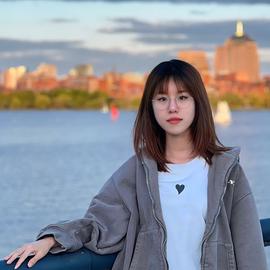
Biography
Hello! I’m a first-year PhD student at the Bioengineering department in Imperial College London, under the guidance of Dr. Pedro Ballester (about our group). Prior to beginning my PhD, I completed my Masters at the University of Edinburgh, where I collaborated with Dr. Diego Oyarzún on machine learning applications for Phenotypic Drug Discovery. I received my Bachelor’s degree from China University of Geosciences. My current research focuses on leveraging Artificial Intelligence for Phenotypic Virtual Screening, with the goal of making noteworthy advancements in the field of drug discovery. I have a strong interest in developing innovative computational approaches that can expedite the identification of potential drug candidates for various diseases.
- Artificial Intelligence
- Drug Discovery
PhD in Artificial Intelligence for Phenotypic Virtual Screening, 2023
Imperial College London
Msc in Bioinformatics, 2021
The University of Edinburgh
BSc in Biology, 2017
China University of Geosciences
Experience

Data Technology and Analysis Department - Data Technology AI Team
Responsibilities:
- Graph-based and language model development for Protein-protein Interaction (PPI) prediction and antibiotic discovery
Responsibilities:
Conducted research on deep learning techniques in phenotypic drug discovery against glioblastoma cells.
Developed and optimized a graph neural network for feature extraction, combining information from RDkit and features extracted from a large pre-trained language model (ChemBERTa).
Improved model architecture and evaluation metrics, particularly for handling imbalanced data.
Effects of red phosphorus on metabolism of microorganisms. Supervised by Dr. Liang Feng.
Responsibilities:
Investigated the effects of red phosphorus on the metabolism of microorganisms.
Utilized Gradient Boosting Tree and Random Forest algorithms to predict the optimal concentration of different types of red phosphorus using transcriptomics data and visible light wavelength.
Conducted data cleaning, analysis, and visualization using Python.
Neosinocalamus growth prediction using image data
Responsibilities:
Analyzed the growth and development of Neosinocalamus affinis using image data.
Collected and processed leaves from Neosinocalamus affinis.
Applied K-means clustering to analyze the correlation between the size, number, and positions of phytoliths and the growth of Neosinocalamus affinis.
Identified the connection between the cells’ structure and components at the molecular level and the growth of Neosinocalamus affinis.
Gallery

Contact
- q.guo22@imperial.ac.uk
- 86 Wood Ln, London, W12 0BZ
- Sir Michael Uren, White City Campus